Give your Achilles Tendon a Bit of a Lift? Part 2

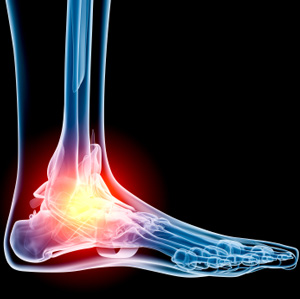
Further Problems/ Injuries that occur Paratenonitis is an acute Achilles injury causing inflammation usually due to overuse, affecting the Tendon Sheath or Paratendo “In really acute cases, the tendon can be a sausage shape, because of the severity of the swelling. This is a common one for runners especially after a long run. They may also feel stiffness and discomfort at the beginning of the run, but as you guys always seem to try to push through the discomfort. a word of warning “This will typically aggravated the injury, when you need to relieve it by rest please do so If left untreated, Paratenonitis will progress to the point that any running becomes extremely difficult.”

Further Problems/ Injuries that occur 

Paratenonitis is an acute Achilles injury causing inflammation usually due to overuse, affecting the Tendon Sheath or Paratendo “In really acute cases, the tendon can be a sausage shape, because of the severity of the swelling. This is a common one for runners especially after a long run. They may also feel stiffness and discomfort at the beginning of the run, but as you guys always seem to try to push through the discomfort. a word of warning  “This will typically aggravated the injury, when you need to relieve it by rest please do so If left untreated, Paratenonitis will progress to the point that any running becomes extremely difficult.”

The area approximately two inches above the Calcaneus attachment is most susceptible. In this area, the Achilles tendon does not have good blood supply or cell activity, so injury can be slow to heal. The tendon receives nutrients from the tendon sheath or Paratendon. When an injury occurs to the tendon, cells from surrounding structures migrate into the tendon to assist in repair. Some of these cells come from blood vessels that enter the tendon to provide direct blood flow to increase healing. With the blood vessels you also get nerve fibres’.

It is believed, that these nerve fibres are the cause of the pain. So while it is healing it will cause you a lot more pain, some say “It is like having an Arrow in your heel” Not very fair but unlike Achilles painful fate, you’re not going to die from it and there are things you can do to help yourself, but recovery from an sever Achilles tendon injury can take anything up to 12 or even 16 months, a long time if you are a runner that is why I always say “Early Intervention is better than long recovery time’s”

So what is Tendinosis? Well the point is most pain within the Achilles tendon, may be classified as Tendinosis. This may be because it involves tendon degeneration, whether it has inflammation or not. In addition, the tendon may become weakened and lose its structure. Aging plays it own part in this process, repetitive injury, or a minor trauma, through occupation or sports. Whatever the reason, “Without proper treatment and healing time, of the area Tendinosis will eventually progress to partial or complete ruptures, if you continue to put high pressure on them, that are physically demanding.

So what is Tendinosis?

Well the point is most pain within the Achilles tendon, may be classified as Tendinosis.

This may be because it involves tendon degeneration, whether it has inflammation or not. In addition, the tendon may become weakened and lose its structure. Aging plays it own part in this process, repetitive injury, or a minor trauma, through occupation or sports. Whatever  the reason, “Without proper treatment and healing time, of the area  Tendinosis will eventually progress to partial or complete ruptures, if you continue to put high pressure on them, that are  physically demanding.

What Can You Do To Help or Prevent Achilles Problems?


Let’s start with the obvious

Preventive exercises aimed at strengthening the gastrocnemius and soleus muscles,

This means,  repetitions of slowly raising and lowering the body while standing on the affected leg, (Calf Raises)   using the opposite arm to assist balance and support if necessary, starting with the heel in a hyperextended position. (Hyperextension is typically achieved by balancing the forefoot on the edge of a step, a thick book, or a barbell weight. so that the point of the heel is a couple of inches below the forefoot. You don’t have to wait till there is a problem to do this exercise use it in your regular stretches,

Don’t take on too much too fast, slowly Increase the intensity and the difficulty of an exercise and running program do not put strain on your Achilles.

An ultimate must here !

Always Use appropriate footwear. The more arch support, the less strain there is on the heel and associated muscles. Wearing heel pads to reduce the strain on the tendon, and remember, if you start to show signs that there is a problem occurring.

Don’t leave it and hope it goes away, you can’t run it off, and it won’t just go away.

Use Standard RICE Treatment with Icecold compression therapy then please seek help. Early intervention can save you from lots of problems later.

 If you have an injury and need more advice give us a call, but please don’t leave it.

A few weeks rest or less, from running is better than 12 months or not ever again. 
 

Give your Achilles Tendon a Bit of a Lift? Part 1

Achilles Tendon

He may have died in the Greek Trojan wars, this tendon is named after him, it is the thickest and strongest tendon in the body, but  to  to many a Runner it is synonymous to injury and be the cause of pain, most  know it as The Achilles Tendon. or the Calcaneal Tendon or the Tendo Calcaneus.

Over the years I have found myself treating many, Achilles Tendon Injures some, after surgery, but I am happy to see more people, getting treatment before the situation has deteriorated to the point that only option is that of surgery, I hope this information may help some of the runners to avoid.

Problems that Occur with the Achilles Tendon.

The Achilles is the tendinous extension of 2 muscles in the lower leg: gastrocnemius and soleus. It also serves to attach the plantaris, gastrocnemius (calf) and soleus muscles to the calcaneus (heel) bone, In humans, the tendon passes the  posterior of the leg to the ankle It is about 15 centimetres (6 in) long, and begins near the middle of the calf.

 The Achilles’ muscle reflex tests the integrity of the spinal root.  The tendon can receive a load stress 3.9 times body weight during walking and 7.7 times body weight when running. (Think about  that on your next run)  Achilles tendon ruptures are most likely to occur in sports requiring, sudden eccentric stretching, such as sprinting, also long runs pounding the pavement will do the job just as well.

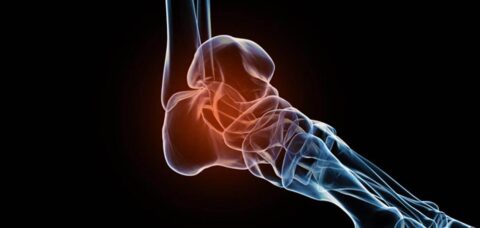
Some of the Problems/ Injuries that occur Insertion Tendonitis This is an inflammation at the point where the Achilles tendon inserts into the heel bone. When you have this problem you will have tenderness directly over the insertion of the Achilles tendon, which is commonly associated with calcium formation, or a bone spur forming just above the insertion point. You may also suffer a Retrocalcaneal bursitis; this is caused by movement-related irritation of the Retrocalcaneal bursa, the fluid-filled cushioning sac between the heel bone and the Achilles tendon. The bursa can become inflamed or thickened and stick to the tendon, because of overuse or repetitive loading. You will feel pain when squeezing the tendon itself or the space just in front of the tendon.

Some of the Problems/ Injuries that occur

Insertion Tendonitis This is an inflammation at the point where the Achilles tendon inserts into the heel bone. When you have this problem you will have tenderness directly over the insertion of the Achilles tendon, which is commonly associated with calcium formation, or a bone spur forming just above the insertion point. You may also suffer a Retrocalcaneal bursitis; this is caused by movement-related irritation of the Retrocalcaneal bursa, the fluid-filled cushioning sac between the heel bone and the Achilles tendon. The bursa can become inflamed or thickened and stick to the tendon, because of overuse or repetitive loading. You will feel pain when squeezing the tendon itself or the space just in front of the tendon.

I know that retrocalcaneal bursitis are  associated with Rheumatoid arthritis ,but in most occurrences in athletes, only  one side is involved so may  not be associated with a “Systemic disease ” Please get this checked by your GP if you have any doubts”.

Tendonitis also involves pain in front of the Achilles tendon and a bony enlargement of the heel bone, known as Haglund’s deformity, which is referred to as a ‘pump bump.’ “Most cases of Haglund’s deformity will occur in ladies who wear high-heeled shoes, but runners are also prone to this sort of injury.

“Abuse of painkillers is putting the careers and long-term health of international footballers in jeopardy” say’s Fifa’s chief medical officer.

Painkillers

Dr Jiri Dvorak found that almost 40% of players at the 2010 World Cup were taking pain medication prior to every game. Ahead of Euro 2012, Dr Dvorak has urged football to wake up to the problem.

He told the BBC that younger players are imitating the seniors and taking painkillers far too frequently. Fifa’s medical team asked team doctors to provide a list of medications that players were taking ahead of each game in the 2010 World Cup.

Previous surveys at international tournaments established that many players were using large numbers of pain killing and non steroidal anti inflammatory drugs (nsaids).

“I think we can use the word abuse – because the dimension is just too much,” Dr Dvorak told the BBC.

Experts say that painkilling medication can be particularly dangerous in professional sport. In high-intensity exercise like football, a player’s kidneys are continuously working hard, making them more vulnerable to damage from strong drugs.

Dr Dvorak believes that a major factor in the growing use of painkillers in football is the pressure on team doctors to get injured players back on the pitch quickly.

“Unfortunately, there is the trend to increase the intake of medication. It is something that we have to really take seriously and ask what is behind it?”

Own Goals can be Painful

“The team doctors, most of them they are under pressure between the diagnosis and the appropriate treatment between the pressure to bring the player on the pitch, if they take them too long out they might be out of a job.”

This is  the report on Painkilling Drugs a worry to everyone, as they are prescribed on a regular basis to people who use them to MASK PAIN not to DEAL with it  and if you continue to use them they can be bad for you.

Yes there is a need for Pain Killing drugs that is not disputed, but if it is a Musculoskeletal problem that can be dealt with through Neuromuscular Release Techniques Sports Injury Therapy or Sports Massage  can help, then surely it is a better way to go. 

The unique advantage of the Bioneuro Dry Therapy System Sigma Q(ΣQ)® is that it can get to an area that may be difficult for Sports Therapy alone,  it penetrates Deeper unlike a Tens Machine that can only deal with surface issues.

Read more on our page about the Bioneuro Dry Therapy System Sigma Q(ΣQ)® and Testimonials from other clients, also listen what Fifa’s chief medical officer has to say about the “abuse” of painkillers on the BBC News Website.

 In a new report we have more information, Folks have a listen to this please This shows that Pain Killers do not help with Back Pain, so why do we still use them.? BBC World Service @bbcworldservice 2h2 hours ago, Easy access to powerful painkillers could be creating a hidden problem of addiction http://bbc.in/15ocAQL

This shows that Pain Killers do not help with Back Pain, so why do we still use them.? BBC World Service @bbcworldservice 2h2 hours ago, Easy access to powerful painkillers could be creating a hidden problem of addiction http://bbc.in/15ocAQL