Help with Muscle Pain and Recovery after Surgery in Norwich Part 3

Bioneuro Sigma Steve Kirby in Use

The Bioneuro Therapy System Sigma Q (ΣQ®)

Prior to surgery  I received treatment on The Bioneuro Therapy System Sigma Q (ΣQ®) I knew that if my Abdominal  muscles were flexible this would make the surgery easier to perform.

The Bioneuro Therapy system Sigma Q (ΣQ®) with its patented technology is capable of deep penetration to areas of the body not normally accessible with other superficially similar systems it works deeply into your Central and Peripheral nervous systems. So it can deliver its effective energy direct to the injured area increasing nerve and blood supply, waking up moribund nerves, regenerating nerve pathways, thereby accelerating recovery.

After allowing time for the wound to heal in my case as is with most people the outer scar tissue is about 10- 11 days

I used the Bioneuro Therapy System Sigma Q (ΣQ®) again,  this  then opened  up of nerve pathways and allowing a steady increase in blood flow, bringing the abdominal muscle back into a functional state quickly.

The muscles as I spoke about in the 1st part of my Blog were the “Multifidus” and the “Transversus abdominal muscles “, I also explained the “Multifidus” and the “Transversus abdominal muscles are very deep muscles and vital to maintain the pelvic stability, rotate and stabilize the spinal structure.

Ref Spinal Stability, we worked the area from the T9 working downward to finish at L1, The Posterior Ramus of the spinal nerves.

Please take a look at the photo, in which we have shown how we placed the pads of the Bioneuro , in the appropriate area to maximise effect, we have shown this with the client lying down on their front , this is only to make it easier to view .

Following treatment on the Bioneuro Therapy System Sigma Q (ΣQ®) combined with the massage, and the use of Neuromuscular Release Techniques

I felt totally pain free and was able to move without pain or restriction what so ever.

This process has strongly aided my rehabilitation to this point. Speaking as a, Sports and Neuromuscular Injury Therapist, undergoing surgery, experiencing the pain and knowing the release from pain, after the treatment, the ability to heal quicker and move more freely has made a big difference.

Help with Muscle Pain and Recovery after Surgery in Norwich Part 2

The Road to Recovery Starts here! ICE has helped I was told by my surgeon that there would be some bruising in the area. Obviously you can’t ICE on the scar area, but it was the muscles that needed to calm down, so I iced my back for 10 mins every two hours in the Multifidus region. This I believe has aided my recovery in the early days following surgery.

The Road to Recovery Starts here!

 ICE has helped

I was told by my surgeon that there would be some bruising in the area. Obviously you can’t ICE on the scar area, but it was the muscles that needed to calm down, so I iced my back for 10 mins every two hours in the Multifidus region. This I believe has aided my recovery in the early days following surgery.

Diet and Fibre

Essential that you realise you are going to have to go to the loo to evacuate your bowels, your natural instinct, is to hold back as you don’t want to push and one thing you don’t want to do is strain, unfortunately tables such as painkillers can bung you up a bit and make it harder to go, you need to be prepared for this, so think fruit and fibre,  and whole grain fibre cereals they will help , and yes the fruit and berries do make a big difference, orange juice , and drink plenty of water. If you know you are going into hospital, then help yourself by getting into a routine of eating in this way and have your body prepared having a smooth conclusion to this matter, will help you to feel so much better.

Diet and Fibre Essential that you realise you are going to have to go to the loo to evacuate your bowels, your natural instinct, is to hold back as you don’t want to push and one thing you don’t want to do is strain, unfortunately tables such as painkillers can bung you up a bit and make it harder to go, you need to be prepared for this, so think fruit and fibre, and whole grain fibre cereals they will help , and yes the fruit and berries do make a big difference, orange juice , and drink plenty of water. If you know you are going into hospital, then help yourself by getting into a routine of eating in this way and have your body prepared having a smooth conclusion to this matter, will help you to feel so much better.

The Exercises I used and found most helpful

Clenching your Gluteus muscles, supports your lower back on movement and lifting

As I said Stability and support of your lower back are vital .Your Gluteus Maximus being  the largest muscle is great for aiding movement such as sitting ,standing and stretching and co-ordination of actions to reduce pain when clenched. 

Get those muscles back in action gently.

The area will be bruised, but the ICE will help with that, as soon as you feel able they need to start being worked. This is done by “lifting your tummy button up towards your back”. Yes, it does take practice! When you are proficient, you can then work up to four sets of ten, holding this for four seconds at a time.

 1st  Sitting upright in a chair, back straight legs slightly apart  breath in through your nose take a deep breath  and clench your glutes at the same time, you will feel your bottom rise slightly and your tummy lift towards your back .)

2nd Again sitting upright in chair legs slightly apart lift hands towards forehead each side, while holding forehead, breath in clench glutes and then slowly rotate your body from the central position to your right, then back to the central, then to the left, the back to central, repeat this again in four sets of ten, holding this for four seconds at a time. Please remember to do this slowly if at any point you feel pain then stop.  One thing I did find with this was it got rid of the build of wind that you seem to have after the abdominal surgery which in its self can be very painful.

3rd Walking a short distance is also greatly beneficial try starting with about 10 minutes a day, then building steadily from there; take it steady it is not a race

 “I would love to have a massage”, but you think you can’t, you feel it could and it would help greatly, but “Normal Orthodox massage would not in my professional opinion be appropriate as lying in a Prone position The area of surgery is a local contra-indication”.

Bio Nuropulse in action

The massage benefits of Post Operative Massage, we have found are the relief of painincrease blood circulationnutrients being transported to aid restoration of the injured area The major benefit that I can evidence is vasio  dilation ( Size of blood vessels increasing).Thus helping to relax the muscle and making it less tight /hypo-tonic.  The Neuromuscular techniques used in treatments, enable the release and breakdown of Adhesions that may have formed due to the  excessive release of collagen while our body was building up the Granulation tissue/ scar tissue   necessary , to repair the injured area, we all realise that, after tissue injury we all  develop scarring to some extent, this is the bodies way of healing the damaged area, it is when it  this  Granulation tissue continues to be produced that problems can occur.

By working with the patient laying supine,  the area of surgery being a local contra indication is avoided.  Also this reduces the need of reliance on pain reducing  pharmacological input,  “I was prescribed painkillers at the hospital, as I am sure everyone is, but they did not agree with me as is the case for a few people.

Help with Muscle Pain and Recovery after Surgery in Norwich Part 1

Folks I have read a lot of comments in reference to Sports Massage Therapist, or Soft Tissue Therapist not being able to open just yet . In all my 30 years of being a therapist I have never known so many of my colleague’s to be so despondent and under valued and it saddens me, because I know how much work they do

I had to undergo an “Inguinal Hernia Repair “ambulatory surgery.”

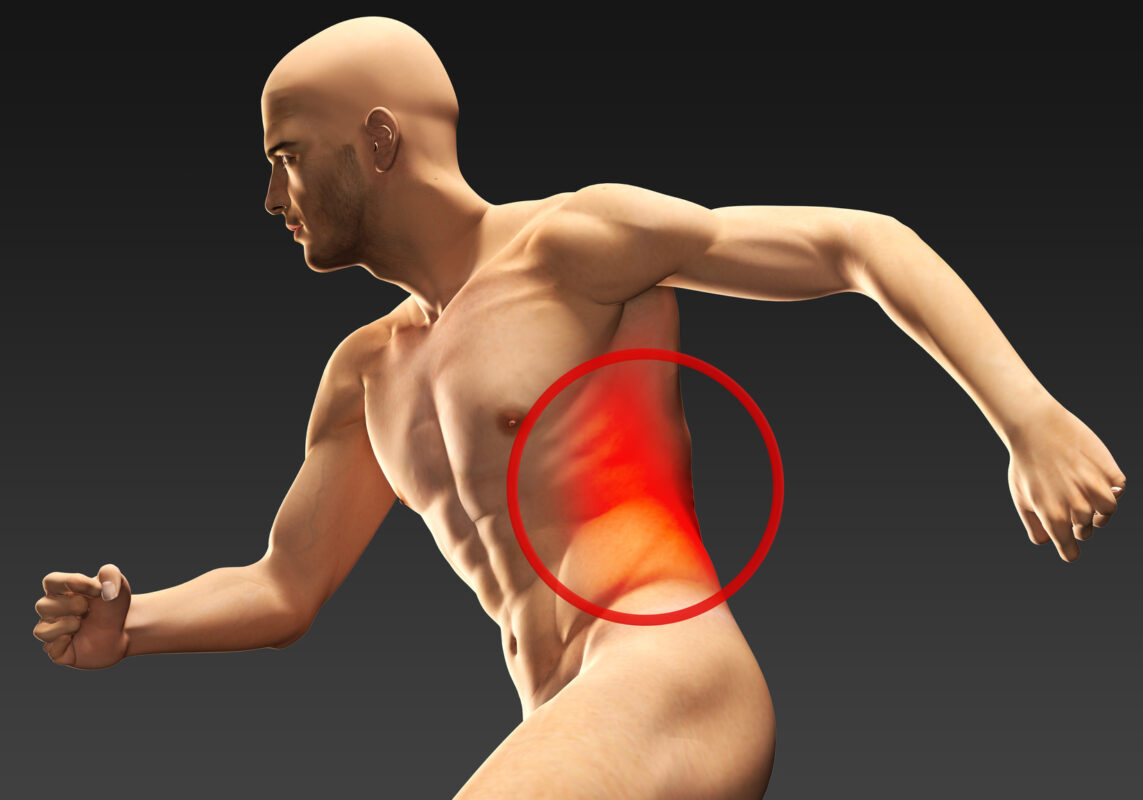
I was acutely aware of physical, muscular nerve related (Myalgia) pain, in my lower back when I came round from the operation.

As a Sports Injury Therapist, I realised that the muscular pain could be dealt with, but because of the surgery. It had to be done in the right way as to not jeopardise my recovery.

Drugs I believe only treat the symptoms they do not treat the cause, but after surgery we do need pain relief, some cannot take medication or find they have a bad reaction to it, we all heal at different rates, some people a lot shorter time than others, I do however believe that by helping ourselves, being proactive in our recovery and rehabilitation, in this sort of situation, it can reduce the healing time considerably for everyone undergoing this sort of surgery.

Transversus abdominal for instance supports your abdominal wall,

So here is my short account, in the hope that it will help others who have to go through this sort of surgery.

Stability is the name of the game.

The complexity of physical motion is exchanged for stability as the body ages .We want Pain free ability to move.

Here is the how and the why! 

The two muscle s that had been affected; during the operation were the “Multifidus” and the “Transversus abdominis”. It was essential to get these working again, these muscles are vital; the Transversus abdominis for instance supports your abdominal wall, aids in forced expiration,

Intra abdominal pressure, as all abdominal muscles work moment to moment as we move, they provide the tension required to translate forces from the lower limbs to the upper limbs.  The Transversus abdominal is the deepest of these muscles and each one from right to left wraps up the organs horizontally and its fascial attachments include lumbar vertebrae rib cage iliac crest and the inguinal ligament. It also provides support of internal organs and tension support for lift for L2 and L3 of the lumber vertebra. The Multifidus extends laterally, it also flexes and rotates the vertebrae column and it also extends laterally to rotate the pelvis. 

Pelvic pain can be divided into nineteen different pathological types . Patients often described Pelvic Pain as a nasty, vile pain that can halt quality of life on a mentally and physically scale. This is very true to life description . Dealing ,with the fascial /tissue and neurological is only part of the answer to gain a positive clinical outcome . We at Get Fit Stay Fit Norfolk can help you with the physical side of recovery. Cutting edge equipment, neuromuscular techniques

As you can see they do a lot of work, Spinal integrity relies on the combined ability of both of the Transversus abdominis and the Multifidus muscles to maintain the pelvic stability and rotate and stabilize the spinal structure .

Back Injury Treatment For James a Dedicated Runner at Getfitstayfit Norfolk

Back Injury Treatment

During the years that I have been a Sports Neuromuscular Injury Therapist I have treated many Runners with various injuries ,getting them back to fitness as soon as I can so they can achieve their goals is one of the things I enjoy the most.

Over the 24 years that I have been a Sports Injury Therapist I have treated many Runners with various injuries ,getting them back to fitness as soon as I can so they can achieve their goals is one of the things I enjoy the most.

Over the years there have also been some great advancements in treatments and I have always kept informed and on top of them.

I have worked with the Bioneuro Sigma Q Therapy system and the Hydrotherm Massage System, as tools for a therapist to use, along with their most important tools their hands, they have proved to be incredibly affective for me at getting my patients back to fitness quicker

Meaning I don’t have to see them as often as some therapist do and they are back doing what they want to do with  “Pain Free Movement”


James is a runner I had seen him in the past due to a work related injury.

I had not needed to see him since, he had continued to run, but just recently after a couple of weeks heavy going, he came to see me again.

This is the email he sent me after treatment

Good Evening Steve

May I first thank you for arranging an appointment to see me so quickly.

I think the best way to sum up the success of yesterdays treatment is to say that having struggled with my jogging in recent weeks (and I know this was against your advice) I successfully completed 10 miles this morning with very little discomfort.  I can highly recommend the Bioneuro sigma Q and Hydrotherm massage treatment and am very grateful for your assistance.

I will contact you again after next Sunday with an update.

Kind regards and thank you for your assistance

James

Ski Injury Recovery And Rehabilitation In Norwich

Ski Injury Recovery And Rehabilitation In Norwich

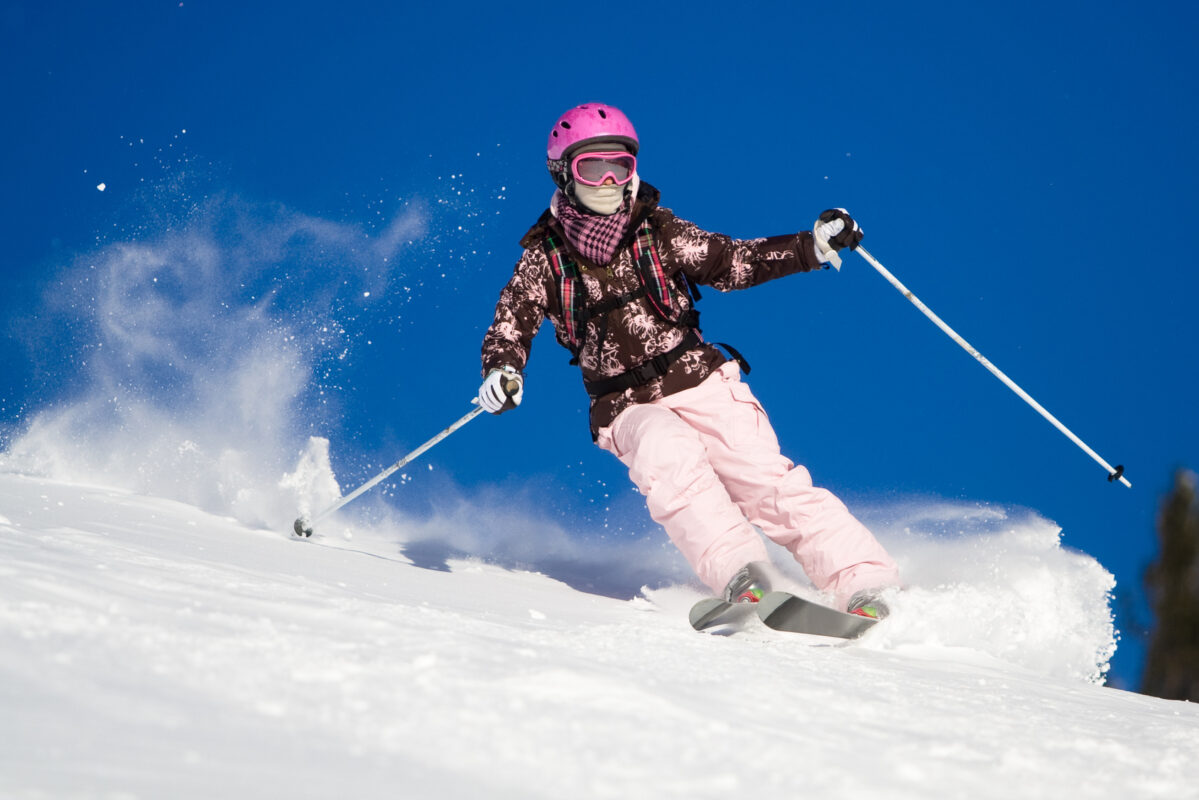
 I  was reminded by one of my clients that it was, Skiing time.

With all the rain we have had and the mildness of the weather it had not occurred to me,

but now with  I feel it is time to talk to folks about Skiing Injuries

like any other sporting injury they can vary, but lets face it  broken arms legs  seem to be the usual suspects, as for your muscle’s, strains and sprains are very prominent , lets not forget you are in cold conditions, so if muscles don’t have time to warm up they will pull and more than likely  to tear.

Although sometimes disasters happen like  the incident that has affected   Michael Schumacher,  these are rare these days and we are thankful he is in a stable condition, also  the German Chancellor Angela Merkel has injured her pelvis on a cross-country skiing trip during her Christmas vacation although she is still working, but  is now having to cancel some of her engagements.


Although sometimes disasters happen like the incident that has affected Michael Schumacher, these are rare these days and we are thankful he is in a stable condition, also the German Chancellor Angela Merkel has injured her pelvis on a cross-country skiing trip during her Christmas vacation although she is still working, but is now having to cancel some of her engagements.

I deal with recovery and rehabilitation of injuries, Sprains, Strains and recovery after all broken bones are  a regular occurrence and in all my years in business, I have had to deal with quite a few, dealing with them using Neuromuscular Injury Techniques, massage on the and with The Bioneuro Therapy System Sigma Q (ΣQ®) 

We all know that prevention is  better that cure and preparation is always better, unless you are to prepared to fail.

It is the same with suppleness and conditioning , if you have regular massage, you muscles are more supple and flexible therefore they will allow you to become more flexible, less prone to injury, no matter what sport or exercise you do.

Ice, snow are unstable surfaces, so it is more important that you counteract that with stability in your body.

Here are some of the Common injuries, and how it may be possible to  avoid them.

 Skier’s thumb. ( A nice name for also known as Gamekeepers Thumb)

This is a  upper extremity injury, affecting  the stabilizing ligaments on the sides of the thumb joints – usually the inside or ulnar collateral ligament (UCL).

How does it happen

It often occurs when a skier falls and they do not release the ski pole, causing over-bending and stressing of the thumb. The first thing is the pain, you will feel it, do not ignore this it is a  signal to see a Doctor or therapist , It could be a  partial tear of the ligament, possibly treated with a splint; a Therapist would be able to advise you because if it is a complete tear it will need surgery, you will need to see a therapist for rehabilitation work after surgery to get you back on track.

Tips on prevention of this injury

Your reaction is to hold on to the Ski pole, Don’t you have to let go of your ski poles the moment you fall. There are certain poles because of the type of handles,  as a beginner you should avoid talk to the Ski shop advisers for information on this to help decrease risk

Knee injuries

As I said the main problem,  40% of all skiing injuries, are  either ACL (Anterior Cruciate Ligament) or MCL (Medial Collateral Ligament) sprains or tears of these ligament and muscle groups,  being the most common.

How does it happen

Knee injuries  usually occur  as the result of the something Skiers call the  Snow Plough Position, ( Imagine you are doing a squat with your knees to far forward, past your toes, your body is not stable and the most extreme point is your knees), so when a skier is falling  in this position  they will hit the knee joint with excessive force. Another injury  caused to the knees, can be because of  Skis crossing or stance widening too far . Again, we may be looking at splinting   as it may resolve the injury, but again there is a possibility of more ruptures occurring,  you may  require surgery. Therapy will defiantly be needed after this and the sooner the better, early intervention, will defiantly speed up recovery.

Tip on prevention of this injury

The best prevention  here is pre-conditioning of your quads, Massage and the correct sort of workout building steadily, should help considerably.  Proper maintenances is so important. Avoid an overly-wide stance, and if you do start to fall, don’t resist, go with it. ( one other tip is why not go to a Jujitsu class and ask for a few lessons  in learning how to fall you will be in a safe environment with guys who specialise in that sort of teaching )

Head injury

As with any head injury it is a must that you get it checked out Straight away DO NOT leave it under any circumstances.

Tip on prevention of this injury

I will pull no punches here. These  can be fatal when skiing at high speeds. So it is important that helmets are worn  they are vital protection, you may find your self in a situation  of travelling down the slope 2-3 times faster than the recommended range, for even the best helmet protection, so if your new to the sport please stay in  the designated areas advised and listen to your instructors.

There is no if’s or maybes about this one, You should always wear a helmet,  you should also monitor your speed to stay within a safe zones. Also, be aware of others around you and your surroundings, use your common sense to avoid collisions, remember you are on a slope of a mountain,  there will be people above you so  look uphill as well as down, and give way when you need to as they may not be able too , Always  follow directions on the signs it could well save your life.

Neck and Shoulder Injury

These can occur from a sudden fall, damage may be to the Clavicle or Scapular  also injury to the Humerus because of impact due to the fall, these injuries seem to be more prevalent with Snowboarders, than Skiers.  In this case it may be a hospital trip to put things back in order, you may also have damage to muscle groups from the Trapezius, Rotator Cuff muscles, to Rhomboids if these muscles are tight, this can be the case especially if you are in a sedentary  working environment  and not use to a rigorous activity, then these muscles are suddenly having to do a lot of stretching  and work.

Tip on prevention of this injury

Try to stay flexible with shoulder and neck muscles, lots of exercises you can do keep supple, massage can be essential for these muscles, as we do seem to not use them as much as we should. When you feel tired, relax these muscles and a hot soak in the bath or a session in a steam room can always be good for them.

If you are New to skiing some quick tips to help:

1. Don’t overdo it, trying to impress your friends, we all need to start out somewhere and if you want to continue with the sport do it sensibly . Start out on easier terrain,  improve your skills gradually take your time enjoy it, you are not in a race you are on a steep learning curve . Before you even start on the real thing , get in shape prepare those muscles, have  proper training, try a dry slope.

2. There is a  skier’s “code of conduct” – these are common-sense rules, you will see them posted on the slopes, don’t ignore them, They are for your benefit, your  protection, and for  the safety and of others, don’t become and injury statistic.

3. We have not mentioned the Ski lifts .You must  Pay attention to them and others when getting on and off the lift, this can be a prime time for injury, and you don’t want that, on your first time out.

4.You have to take breaks. I know in the  excitement you will want spend your Ski time challenging yourself . Injury rates do increase with fatigue, when you are tired you are not focused, pace your self , rest when you feel you need to take it sensibly and steady  , as with any  exercise you will need to stay hydrated so you still need to drink plenty of water.

5. Learn to take the fall; Don’t fight it , as I have already stated  fighting it is how ligaments get torn and damaged. Your bottom can is your best friend  If you can, sit down to break the momentum Also this will naturally bring you down into a foetal shape. Tucking every thing in. Less area to damage.

6.  Take lesson from a professional, that is what they are there for, to improve your technique you skill and to help you avoid any bad habits , don’t take short-cuts , they will not do you any favours .

If you do sustain an injury

You should see the doctor, don’t be a hero, whenever you sustain any type of injury. Skiing injuries  should always be evaluated to avoid the possibility of long term damage, most can usually be treated without operative intervention and can be stabilized  and treated  by a therapist  with excellent results.

Before you venture out on the slopes, get in shape!

Skiing  will put heavy demand on some major muscle groups, so lets get them prepared. I will say this again regular massage is a preventative  measurement as well as a recovery and rehabilitation measure.

Quadriceps are the main muscle group used for skiing; they maintain your stance and protect your  knees. You need to get them in shape, try squats and remember  your knees should not go over your toes.

Glutes & Hamstrings: These allow you to  flex, forward into the leaning position needed for  downhill skiing, it  requires great strength and a lot of work  from your hamstrings and glutes.

Thighs: Your  inner thighs keep the skis together, while outer thighs are the main  provider of stability and steering.

Calf muscles the Gastrocnemius and the Soleus.  keep you upright over your bent knees. These are your power house you need to strengthen them.

Abs and Back:  When Skiing you need to be in the proper flexed, bent position but this will put stress on your back. You need to  strengthen your core stability to prevent spinal injury.

Arms: You need to be able to  push-off with power and stability, so work on the  shoulder joints,  biceps and triceps need to be  part of your  preparation routine.

Look at the whole package and work it out with your trainer, don’t miss out the massage it is a must to keep all those muscles in top working order. 


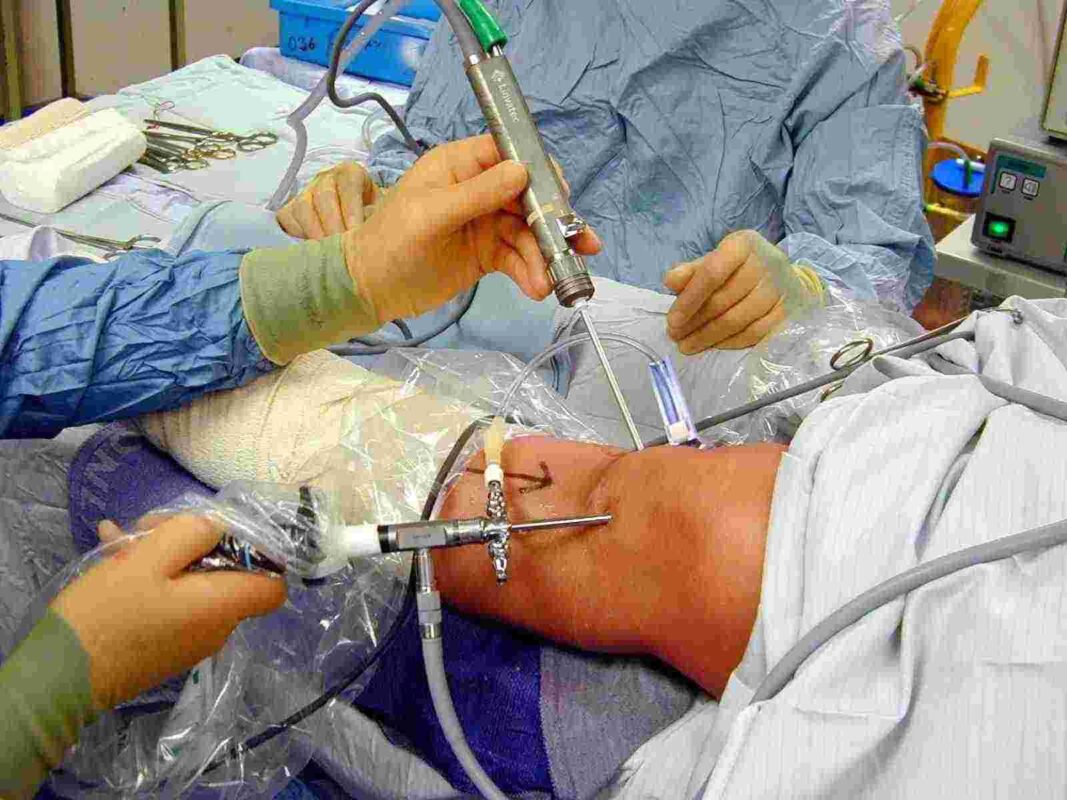
Quicker Recovery, from Knee replacement surgery or injury, in Norwich Norfolk, With Getfitstayfit Norfolk

Knee replacement surgery

A patient now back in action, due to the Aid of  The Bioneuro Therapy System Sigma Q (ΣQ®) 

Jackie from Brundall had been suffering with excessive knee pain and her movement was restricted, following her visits to her GP then to an Orthopaedic Surgeon, a date was planned for a knee replacement. For Jackie the pain became debilitating, not being a lady who regularly took pain killers.

She came to Getfitstayfit Norfolk to see if we could help.

“When my knee started giving me a considerable amount of pain I when to my GP and was told a knee replacement was necessary, as an active person I knew I had to keep on top of this as I try to avoid pain killers as much as possible.

I knew of Steve Kirby and Getfitstayfit Norfolk as it is a local business in our area and had treated a friend, very successfully, I contacted him to see if he could help. Steve started treating me on The Bioneuro Therapy System Sigma Q (ΣQ®), I found  the pain was greatly reduced and I was able move with a lot more ease, and a lot less pain, my muscles where in a good state of health following treatment and I was ready for the surgery.

The operation went well and I was quickly back having The Bioneuro Therapy System Sigma Q (ΣQ®) treatment with Steve, about three times a week. I had to attend physiotherapy at the hospital, which I did not feel happy with at all, pushing and forcing the knee, made it very painful.

So I decided I would stick with the treatment from Steve, with the Bioneuro, some gentle exercise this did the trick, with no pain regular monitoring and all in my time, a lot quicker I feel, than I would have achieved with just the painful exercises.”

The Bioneuro Therapy System Sigma Q (ΣQ®)  is fully medically tested and approved to help aid in the recovery from knee injuries and in Pre and Post knee replacement surgery, quicker than you can ever imagine. The system works deeply into the deep nerves and muscle’s, helping to take away swelling, improve blood flow and aid mobility.


The operation went well and I was quickly back having The Bioneuro Therapy System Sigma Q (ΣQ®) treatment with Steve, about three times a week. I had to attend physiotherapy at the hospital, which I did not feel happy with at all, pushing and forcing the knee, made it very painful.

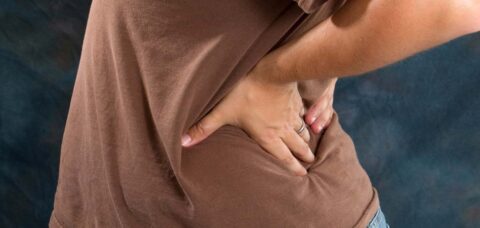
Treatment For A Painful Back In Norwich, Getfitstayfit Norfolk Says “We All Need Good Treatment”

Treatment For A Painful Back In Norwich

One of my clients recently, told me that  prior to coming to my clinic, she had been told.

“Everyone has back problems and you’ve just got to live with it”.

I believe that is a  almost criminal comment. My question is why is this the case and why do we accept it.?

When someone has a Painful Back they should have treatment for it.

Pain comes in several different forms, from the dull nagging ,sharp and sudden, to the pain we have with  Osteo and Rheumatoid Arthritis .

There are many reasons,but not dealing with muscular pathologies, surely is not the right way to go.

We should not just be expected  to accept it and live with it. This is the field in which we work at Getfitstayfit Norfolk.

If a joint is out of out of alignment it will easily cause multiple issues, one being the lack of good blood supply, then concerns with the nervous system creating pain. Hyperirritable area’s in taut muscle are never a good thing.

Trigger points often appear, also known as trigger sites or muscle knots,( just for the record although called muscle knots a muscle can not knot as it has an origin and an insertion ) are described as hyperirritable spots sarcomeres  in skeletal muscle that are associated with palpable nodules in taunt bands of muscle fibres

Research  has improved considerably in the knowledge of what a Trigger Point Formation is, this is when a dysfunctional endplate occurs, commonly associated with a strain or the over building of muscle tissue that can then be damaged, stored  calcium is realised at the site that creates a oxygen nutrient deficit.

Adenosine triphosphate (ATP) is needed in order to remove the excessive calcium the problem is that ATP is decreased by the tightening of the tissue this then restricts the blood supply . The persistence’s of high calcium  level resumes  causing  Acetylcholine (ACh), release creating  a viscous cycle.

Trigger points often appear, also known as trigger sites or muscle knots,( just for the record although called muscle knots a muscle can not knot as it has an origin and an insertion ) are described as hyperirritable spots sarcomeres in skeletal muscle that are associated with palpable nodules in taunt bands of muscle fibres Research has improved considerably in the knowledge of what a Trigger Point Formation is, this is when a dysfunctional endplate occurs, commonly associated with a strain or the over building of muscle tissue that can then be damaged, stored calcium is realised at the site that creates a oxygen nutrient deficit. Adenosine triphosphate (ATP) is needed in order to remove the excessive calcium the problem is that ATP is decreased by the tightening of the tissue this then restricts the blood supply . The persistence’s of high calcium level resumes causing Acetylcholine (ACh), release creating a viscous cycle.

Why we can help You.!

The need is to stop the cycle. We specialise in Neuromuscular injury, with cutting edge equipment Neuromuscular Injury Techniques.

The equipment we us is the Bioneuro Therapy System Sigma Q (ΣQ®) designed to deal with, Trigger points, muscle injury and recovery.

It works into deep muscles and nerves which are difficult for a traditional massage therapist to manipulate to enable quicker recovery and “Pain Free Movement “

Runners Knee How Bad IS IT, Advice in Norwich Norfolk.

Runners Knee How Bad IS IT, Advice in Norwich Norfolk

It always amazes me how a type of injury or condition can become synonyms with certain types of  activities or people.  My concern is by simplifying the name of the injury , are we simplifying the injury itself. 

For instance Policeman’s Heel, Athletes’ Foot, Golfers Elbow, Tennis Elbow or Housewives/ Housemaids Knee, (this affects roofers more than any one else),  Builders Back and of course Runners Knee, really are these things a diagnosis  ?

The answer is No they are not, in some case’s it is what we would call an coverall for a few problems, used because the exact problem has not been fully diagnosed for what ever reason.

With muscular injuries this can be the case, because of transferred pain or more than one group of muscles being affected, it should not however take away  the serious of the injury, or the treatment needed just because it has a simple name.

Take Runners Knee for instance.  The real name is  Chondromalacia patellae (CMP)

This is what Wikipedia has to say about it

While the term Chondromalacia sometimes refers to abnormal-appearing cartilage anywhere in the body,it most commonly denotes irritation of the underside of the kneecap (or “patella”). The patella’s posterior surface is covered with a layer of smooth cartilage, which the base of the femur normally glides effortlessly against when the knee is bent. However, in some individuals the kneecap tends to rub against one side of the knee joint, irritating the cartilage and causing knee pain.

This is what Wikipedia has to say about it While the term Chondromalacia sometimes refers to abnormal-appearing cartilage anywhere in the body,it most commonly denotes irritation of the underside of the kneecap (or “patella”). The patella’s posterior surface is covered with a layer of smooth cartilage, which the base of the femur normally glides effortlessly against when the knee is bent. However, in some individuals the kneecap tends to rub against one side of the knee joint, irritating the cartilage and causing knee pain.

The condition may result from acute injury to the patella or chronic friction between the patella and a groove in the femur through which it passes during knee flexion. Possible causes include a tight iliotibial band, Neuromas, bursitis, overuse, malalignment, core instability, and patellar maltracking.

Pain at the front or inner side of the knee is common in both young adults and those of more advanced years, especially when engaging in  football gymnastics cycling rowing tennis ballet basketball, horseback riding, volleyball, running, figure skating, snowboarding, skateboarding, and even swimming. The pain is typically felt after prolonged sitting.” Skateboarders most commonly experience this injury in their non-dominant foot due to the constant kicking and twisting required of it. Swimmers acquire it doing the breaststroke, which demands an unusual motion of the knee

See what I mean it is not so simple and it is not restricted to Runners,

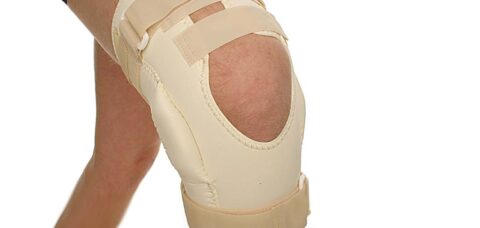
One thing that is apparent, there is pain and you need to rest it and  get treatment, or it will not get better,  just categorising the problem as Runners Knee, will by itself not sort out the problem, you still need to put a treatment package in place with your Doctor so ask the question ” What sort of Runners Knee is it”. Don’t just assume, and don’t let your Doctor just assume you know what it is, you need to have answers you need the right treatment, mainly because you don’t want to make it worse, you may need to wear a knee brace or you may be on your way to a meniscus problem and surgery.

One thing that is apparent, there is pain and you need to rest it and get treatment, or it will not get better, just categorising the problem as Runners Knee, will by itself not sort out the problem, you still need to put a treatment package in place with your Doctor so ask the question ” What sort of Runners Knee is it”. Don’t just assume, and don’t let your Doctor just assume you know what it is, you need to have answers you need the right treatment, mainly because you don’t want to make it worse, you may need to wear a knee brace,Don’t just assume, and don’t let your Doctor just assume you know what it is, you need to have answers you need the right treatment, mainly because you don’t want to make it worse, you may need to wear a knee brace or you may be on your way to a meniscus problem and surgery.

You need an idea of recovery time, don’t forget, when a professional athlete has an injury they have down time to recover, you may not  have that time period, you have to work, what you do in work may irritate the injury. All these factors have to be taken in to consideration. Something that some one with knee problems needs to be aware of they are nearly always degenerative,  don’t assume it will go away it may settle down for a time, but things can trigger it off again and you can be your own worse enemy.

Piriformis Syndrome Suffered For 23 Years Restored To Fitness In A Few Weeks By Getfitstayfit Norfolk For This Norwich Lady

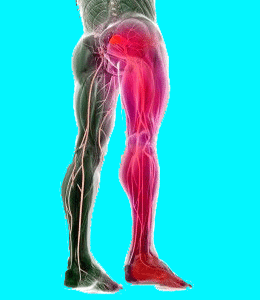
I started to get a sore hip about 23 years ago, it’s on set coincided with starting to drive. It hurt on and off for about 16 years, it was inconvenient at times, but not too bad. Then just over 7 years ago my whole lower back and hamstrings became very tight and sore pretty much all the time. There were periods when my Piriformis muscle was so painful I could not stand still for more than 2 minutes.

J came to our Clinic a couple of months ago, first time on meeting it was clear this was a lady who was so stressed, because she was in great pain, and felt that she had never been listened too about her injury, she needed help so Steve was determined to get to the root of the problem and sort it out.

“I started to get a sore hip about 23 years ago, it’s on set coincided with starting to drive. It hurt on and off for about 16 years, it was inconvenient at times, but not too bad. Then just over 7 years ago my whole lower back and hamstrings became very tight and sore pretty much all the time.

There were periods when my Piriformis muscle was so painful I could not stand still for more than 2 minutes.

Sometimes when my whole lower back would lock up so it would take about 5 minutes to bend myself into a chair and to straighten out again when I wanted to get up. The flare up’s were awful, my back used to take about 3 months to calm down.

Sometimes when my whole lower back would lock up so it would take about 5 minutes to bend myself into a chair and to straighten out again when I wanted to get up. The flare up’s were awful, my back used to take about 3 months to calm down. When it was really bad, I certainly couldn’t do everyday things like bend down to look in a draw or pick something off the floor. The worse thing was I never knew what was going to set it off, I got so paranoid at trying to prevent a flare up I kept diaries to try and second guess what might aggravate it. I took a cushion everywhere with me as hard chairs were a big no no. It was a really miserable existence.

When it was really bad, I certainly couldn’t do everyday things like bend down to look in a draw or pick something off the floor. The worse thing was I never knew what was going to set it off, I got so paranoid at trying to prevent a flare up I kept diaries to try and second guess what might aggravate it. I took a cushion everywhere with me as hard chairs were a big no no. It was a really miserable existence.

When I explained these limitations to my doctor, rather than being concerned that an otherwise very healthy 38 year old, that until recently used to play rugby and run regularly, was unable to bend over due to extreme muscle tightness and lower back pain, she suggested that I stop trying to bend down! That was it, that was all she had to offer. Oh, that and some drugs to dull the pain.

Eventually I left the job I loved so that I could work part time as I thought sitting at a desk all week might have been part of the problem. It didn’t really make much difference.

Over the years I have seen all manner of back people, chiropractors, physios, osteopaths, sports masseurs, occupational health specialists, you name it, I just wish they were on performance related pay because none of them managed to make much of a difference and I have spent a fortune. It wasn’t just the odd appointment either, I saw one guy regularly at the Spire hospital for over a year.

I think it would be fair to say most of them just wanted to know which bit hurt at the time and they would then work on that area. No one seemed interested in the underlying problem i.e. the cause of my tight leg and back muscles that I knew was causing all the problems.

I asked many times, believe me, I just never got an answer.

Then during the summer holidays this year, after struggling to walk the half mile to the local park with my sons so they could practice a bit of rugby, I decided enough was enough.

At the time it was my Piriformis muscle that was really bad so I Googled ‘Piriformis/Norfolk’ (as not all specialists even believe in Piriformis syndrome, let alone know what to do with it) and Steve’s details were top of the search list. Piriformis Syndrome

Steve agreed to fit me in that night at his home clinic. Rather than doing the usual massage on the area that I was used to from other physios, he put my feet in a bucket of water and then connected me to the mains. To be honest I thought at best he was a bit eccentric and at worst he was going to kill me. I was actually quite disheartened. After reading his web site earlier, I had felt more positive about seeing Steve than I had most of the other specialists I had seen over the years. It was that old cliché of ‘could he be the one?

I asked many times, believe me, I just never got an answer. Then during the summer holidays this year, after struggling to walk the half mile to the local park with my sons so they could practice a bit of rugby, I decided enough was enough. At the time it was my Piriformis muscle that was really bad so I Googled ‘Piriformis/cure/Norfolk’ (as not all specialists even believe in Piriformis syndrome, let alone know what to do with it) and Steve’s details were top of the search list. Piriformis Syndrome

I was clinging on for Hope.

After the appointment, I didn’t feel much better and was feeling really down, but the next morning I woke up and I just knew something was different. Not just better, but different. I have been seeing Steve for about two months now and for the first time in 23 years I feel nearly normal and I know he is going to make me pain free. When Steve first started treating me he promised he would make me pain free and although that promised cheered me up no end, I didn’t really believe him. Not deep down.

Steve’s view is that if a back hurts, there is a problem that needs fixing. Find the source of the problem and fix it – for good.

So many so called professionals have told me to expect to have back pain, that everyone has back pain, that it’s normal. To get on with it, to accept it, to live with it, accommodate it.

And the really sad thing is, I was actually starting to listen to them! I gave up a job I loved and was bracing myself for an old age blighted by a back that was surely only going to get worse.

Well now I feel fantastic. I have got a new job – full time again – I feel like I did when I was 20. I feel so ‘normal’ I still can’t believe it. It’s been so long I can hardly remember what normal is.

Every time I bend down to get something out of a cupboard, I notice that I don’t hurt or have to do the task by kneeling on the floor. Every morning when I first get out of bed and don’t have to walk to the bathroom semi bent because I can’t straighten up for a while, I notice it. I think I will be noticing it for a long time.

Steve is amazing. He uses his ‘fizzy’ machine to sort you out. It really works miracles. And it feels fab, bit like a spa session!

Deborah takes her Running Seriously, when she was in Pain she came to Getfitstayfit Norfolk for Help

Running Seriously

This is her Testimony, she had been suffering for a year before she came to Getfitstayfit Norfolk. We always say early intervention is the best way to aid recovery, the longer it is delayed the longer it takes to recover, we try to improve recovery rate and get people back to fitness as soon as possible.

“I came to Steve after recommendations from members of my running club.

I’d recently been suffering with knee pain but also low back pain upon waking in the morning for over a year.

I’d seen a chiropractor, a physio, an osteopath and even had an MRI scan all to no avail. In the end my doctor just said it’s muscular and prescribed me Amitriptyline!

Steve was great. He identified my IT band and TFL muscle were tight and used the Bioneuro System Sigma  Q(ΣQ® to free them off. It was a strangely pleasant sensation and the muscles felt a lot looser after. Alas, my symptoms didn’t go away, but Steve was determined to solve my problems. He’s like a dog with a bone!

He was regularly in touch to see how things were going and he researched my symptoms to try and find the answer. Eventually he suggested using the Bioneuro System Sigma  Q(ΣQ® on my Psoas muscle.

Running and sitting at a desk all day had made this short and tight and can be responsible for low back pain. I am delighted to say I can now sleep free from pain, without the need for pillows under my legs and without the Amitriptyline! As for the knee pain, it’s getting better with postural and running form correction’

I’d recommend to anyone suffering with muscular issues to seek out Steve. He really can help, he doesn’t give up on you even when you feel you want to give up he made such a difference

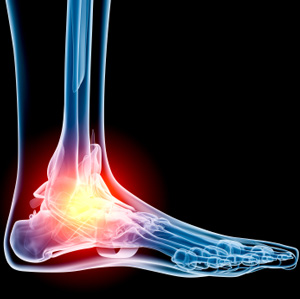
Plantar Fasciitis , Plantar Fasciosis.or Capsulitis.Getfitstayfit Norfolk Asks Which Is It ?

Plantar Fasciitis , Plantar Fasciosis or Capsulitis

You may have heard of Plantar Fasciitis,  it is Painful, but you may not have realised that there is also Plantar Fasciosis or Capsulitis they are all different,

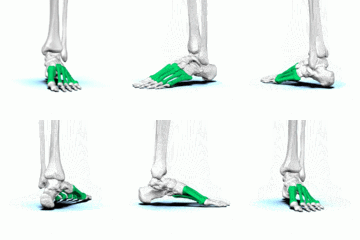
The main differences being  that with Plantar Fasciitis there is inflammatory swelling in the area  around  the connective tissue or ligament on the sole (bottom surface) of the foot.

This is a common condition and if treated immediately it may not degenerate.  The plantar fascia is a thick fibrous band of connective tissue originating on the bottom surface of the calcaneus (heel bone) and extending along the sole of the foot towards the toes.

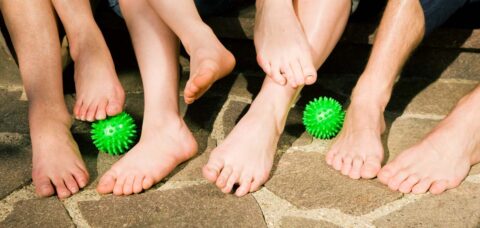
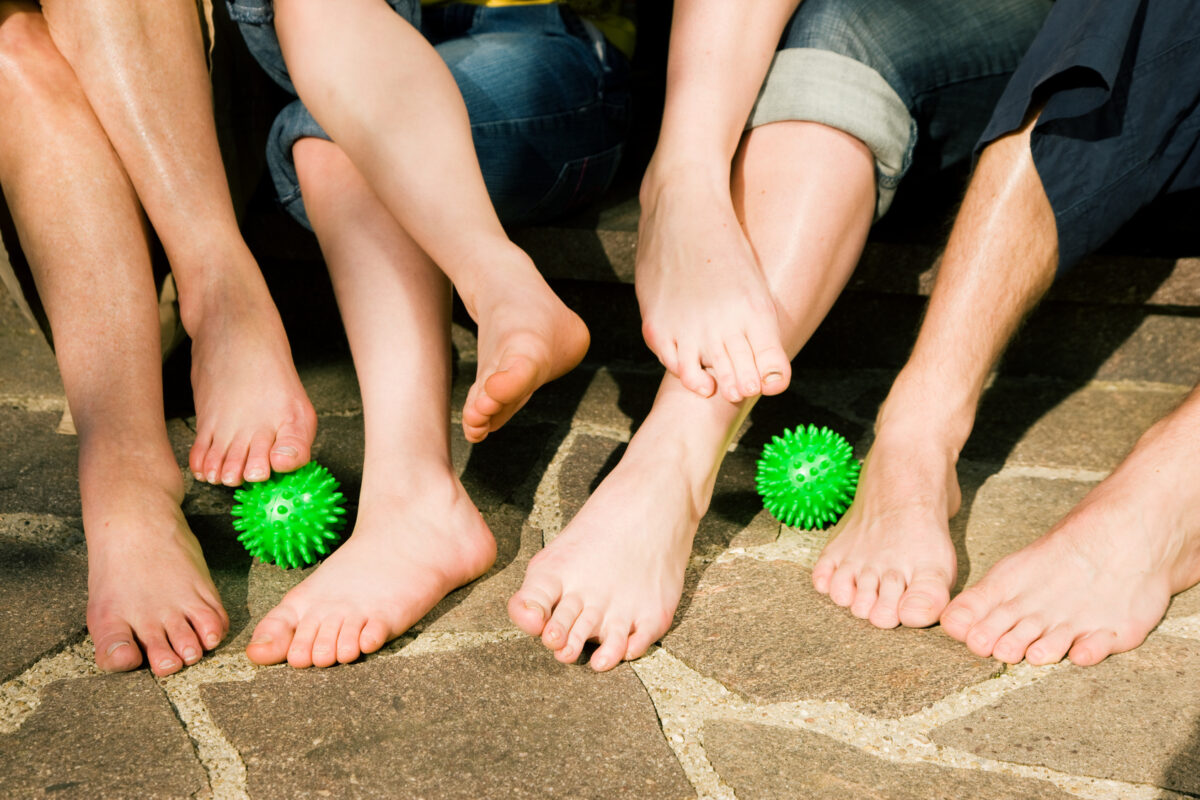
The best treatment is R.I.C.E. As the swelling goes down , then and only then can you start on stretching the area again some of the exercise’s  include a Tennis or golf ball and rolling it under the foot from the toes to the heel, massage of the area is very useful, but remember with out treatment and care it will degenerate, to become a long term injury. So take care rest when it is needed, keep on top of it, or it will beat you. What causes it, now here is the problem if you are a runner, or dancer the bad news is, it is often caused by overuse of the plantar fascia, increases in activities, weight or age.

This is a common condition and if treated immediately it may not degenerate. The plantar fascia is a thick fibrous band of connective tissue originating on the bottom surface of the calcaneus (heel bone) and extending along the sole of the foot towards the toes.You may have heard of Plantar Fasciitis, it is Painful, but you may not have realised that there is also Plantar Fasciosis or Capsulitis they are all different, The main differences being that with Plantar Fascitis there is inflammatory swelling in the area around the connective tissue or ligament on the sole (bottom surface) of the foot. This is a common condition and if treated immediately it may not degenerate. The plantar fascia is a thick fibrous band of connective tissue originating on the bottom surface of the calcaneus (heel bone) and extending along the sole of the foot towards the toes. The best treatment is R.I.C.E. As the swelling goes down , then and only then can you start on stretching the area again some of the exercise’s include a Tennis or golf ball and rolling it under the foot from the toes to the heel, massage of the area is very useful, but remember with out treatment and care it will degenerate, to become a long term injury. So take care rest when it is needed, keep on top of it, or it will beat you. What causes it, now here is the problem if you are a runner, or dancer the bad news is, it is often caused by overuse of the plantar fascia, increases in activities, weight or age.

The long term condition Plantar Fasciosis . The suffix “osis” implies a pathology of chronic degeneration this is  without inflammation. Since tendons and ligaments  do not contain blood vessels they do not actually become inflamed. Instead, injury to the tendon is usually the result of an accumulation over time of microscopic tears at the cellular level. Well folk this is still not looking good if you are a runner or dancer as these microscopic tears  need time to heal, we all know how dedicated runners are to there sport, but if not treated and time taken to rest , then running may no longer be an option. Better to rest when you need should, than to have to give up all together.

We don’t want this to happen, Prevention is the best way to go with this problem, first your feet are your best friends you need them never mind Stand by me this is a case of Stand on them and you need to be able to with out pain.

How do we know we have it

First of all there is , the pain, usually felt on the underside of the heel and is often most intense with the first steps of the day not a  great way to start the morning . Another symptom is that the sufferer has difficulty bending the foot so that the toes are brought toward putting on shoes the shin (decreased dorsiflextionof the ankle ). Also a symptom commonly recognized among sufferers of plantar fasciitis is an increased probability of knee pain, this is very presented among  runners


Capsulitis. 

This is pain that is  Sometimes felt in the  ball-of-foot it is  mistakenly assumed to be derived from plantar fasciitis, But this is a dull pain or numbness in the metatarsal region of the foot  and unlikely to be the plantar fascia inflamed and  more likely to be the  metatarsalgia, also called Capsulitis.  This is an inflamed flexor digitorum brevis muscle

Some of the Problems/ Injuries that occur Insertion Tendonitis This is an inflammation at the point where the Achilles tendon inserts into the heel bone. When you have this problem you will have tenderness directly over the insertion of the Achilles tendon, which is commonly associated with calcium formation, or a bone spur forming just above the insertion point. You may also suffer a Retrocalcaneal bursitis; this is caused by movement-related irritation of the Retrocalcaneal bursa, the fluid-filled cushioning sac between the heel bone and the Achilles tendon. The bursa can become inflamed or thickened and stick to the tendon, because of overuse or repetitive loading. You will feel pain when squeezing the tendon itself or the space just in front of the tendon.

Looking after your feet. It is Essential.

If your a runner at some point your will get the urge to try for one of the Big Ones you will want the medal , so preparation is of the utmost importance. Having looked after a quite a number of runners at events including the London Marathon, I have seen some injuries cause by the wrong shoes from  gait to knee injuries, lower back problems and  messed up feet, a lot of these injuries could have been prevented by the right footwear, we recommend and advise our clients  to go to a good Sports shop, that know what they are talking about . The reasons why you need a certain shoe, from the shape to  the type of material  structure of the shoe. As Sports Injury  Therapist I don’t sell shoes, but I do have a very good relationship with  some Sports shops so I asked for advice  on your behalf from a very reputable company this is what Neil of Sportlink Running-Fitness Specialists  had to say.

” My main warning would be to just be very careful who you buy from online i.e. always buy from a running specialist!!

I have been in this trade for 25 years and have seen so many changes during that time. I know the industry inside out having also worked with a number of manufactures as well.

There are lots of processes that shoes have to go through during the manufacturing of a quality shoe i.e. moulding, temperatures, time, etc, etc and this is just for the midsole. However and as with all industries some times there are one or two problems whereby product is not finished correctly and end up being sold via the grey market to wholesalers in bulk i.e. grade two and even grade three product.

Looking after your feet. It is Essential. If your a runner at some point your will get the urge to try for one of the Big Ones you will want the medal , so preparation is of the utmost importance. Having looked after a quite a number of runners at events including the London Marathon, I have seen some injuries cause by the wrong shoes from gait to knee injuries, lower back problems and messed up feet, a lot of these injuries could have been prevented by the right footwear, we recommend and advise our clients to go to a good Sports shop, that know what they are talking about . The reasons why you need a certain shoe, from the shape to the type of material structure of the shoe. As Sports Injury Therapist I don’t sell shoes, but I do have a very good relationship with some Sports shops so I asked for advice on your behalf from a very reputable company this is what Neil of Sportlink Running-Fitness Specialists had to say .

Any good running specialist would not touch this product with a barge pole!!

We certainly will not, but do see it several times when customers come back to us with a pair of supposed top quality shoes that have broken down very quickly due to soft midsoles or the customer is injured due to the midsoles being too hard.

We can tell straight away just by feel and sometimes from the codes inside the tongue. Anything more than 25% off trade is basically old stock which has to be cleared, but after a maximum of two years oxidation of the EVA foam is likely to have taken place or as already stated the product could be faulty. At Sportlink as I am sure at The Runners Centre and Pilch as well, you can be sure that you will always be sold product of the highest quality. Running shoes are the most important piece of kit you will buy, so always be 100% sure before buying

Getfitstayfit Norfolk Say “Age should not Stop you”

Age should not Stop you

When you get a little older, you start to question what you can or can’t do in regards to exercise,

You worry about injury , but this is a time in your life when you can start to enjoy doing things , what you need to do though  is.

Keep Flexible ,Supple , Know Your Limits And Enjoy Life.

Neuromuscular Injury Therapy, along with Massage helps  keep things pumping, it moves the lymphatic system it keeps blood flowing to the muscles, it keeps those muscle flexible,  less chance of aches and pains, it also releases the bodies own feel good factor Endorphins that help with our own Natural Healing Abilities . Here at our Treatment Room at Getfitstayfit Norfolk we use these therapies to aid our clients, to insure their abilities to stay supple

The Bioneuro Therapy system works with the clients own body,  even better than a Deep Tissue, Sports Massage without the need to apply as much pressure.

Free From Pain

Just because you are getting older it does not mean you have to do less.

When you have had a life that has been on the go all the time ,then you retire it is  better to Keep active, Mentally and Physically, so find hobbies that suit and stimulate  you like  running , swimming ,dancing, there are so many activities out there you can do. All you have to do is embrace them and keep fit enough to do them.  after all it is about you and what you need to keep you on top form.