Piriformis Syndrome Suffered For 23 Years Restored To Fitness In A Few Weeks By Getfitstayfit Norfolk For This Norwich Lady

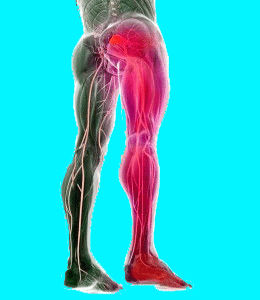
I started to get a sore hip about 23 years ago, it’s on set coincided with starting to drive. It hurt on and off for about 16 years, it was inconvenient at times, but not too bad. Then just over 7 years ago my whole lower back and hamstrings became very tight and sore pretty much all the time. There were periods when my Piriformis muscle was so painful I could not stand still for more than 2 minutes.

J came to our Clinic a couple of months ago, first time on meeting it was clear this was a lady who was so stressed, because she was in great pain, and felt that she had never been listened too about her injury, she needed help so Steve was determined to get to the root of the problem and sort it out.

“I started to get a sore hip about 23 years ago, it’s on set coincided with starting to drive. It hurt on and off for about 16 years, it was inconvenient at times, but not too bad. Then just over 7 years ago my whole lower back and hamstrings became very tight and sore pretty much all the time.

There were periods when my Piriformis muscle was so painful I could not stand still for more than 2 minutes.

Sometimes when my whole lower back would lock up so it would take about 5 minutes to bend myself into a chair and to straighten out again when I wanted to get up. The flare up’s were awful, my back used to take about 3 months to calm down.

Sometimes when my whole lower back would lock up so it would take about 5 minutes to bend myself into a chair and to straighten out again when I wanted to get up. The flare up’s were awful, my back used to take about 3 months to calm down. When it was really bad, I certainly couldn’t do everyday things like bend down to look in a draw or pick something off the floor. The worse thing was I never knew what was going to set it off, I got so paranoid at trying to prevent a flare up I kept diaries to try and second guess what might aggravate it. I took a cushion everywhere with me as hard chairs were a big no no. It was a really miserable existence.

When it was really bad, I certainly couldn’t do everyday things like bend down to look in a draw or pick something off the floor. The worse thing was I never knew what was going to set it off, I got so paranoid at trying to prevent a flare up I kept diaries to try and second guess what might aggravate it. I took a cushion everywhere with me as hard chairs were a big no no. It was a really miserable existence.

When I explained these limitations to my doctor, rather than being concerned that an otherwise very healthy 38 year old, that until recently used to play rugby and run regularly, was unable to bend over due to extreme muscle tightness and lower back pain, she suggested that I stop trying to bend down! That was it, that was all she had to offer. Oh, that and some drugs to dull the pain.

Eventually I left the job I loved so that I could work part time as I thought sitting at a desk all week might have been part of the problem. It didn’t really make much difference.

Over the years I have seen all manner of back people, chiropractors, physios, osteopaths, sports masseurs, occupational health specialists, you name it, I just wish they were on performance related pay because none of them managed to make much of a difference and I have spent a fortune. It wasn’t just the odd appointment either, I saw one guy regularly at the Spire hospital for over a year.

I think it would be fair to say most of them just wanted to know which bit hurt at the time and they would then work on that area. No one seemed interested in the underlying problem i.e. the cause of my tight leg and back muscles that I knew was causing all the problems.

I asked many times, believe me, I just never got an answer.

Then during the summer holidays this year, after struggling to walk the half mile to the local park with my sons so they could practice a bit of rugby, I decided enough was enough.

At the time it was my Piriformis muscle that was really bad so I Googled ‘Piriformis/Norfolk’ (as not all specialists even believe in Piriformis syndrome, let alone know what to do with it) and Steve’s details were top of the search list. Piriformis Syndrome

Steve agreed to fit me in that night at his home clinic. Rather than doing the usual massage on the area that I was used to from other physios, he put my feet in a bucket of water and then connected me to the mains. To be honest I thought at best he was a bit eccentric and at worst he was going to kill me. I was actually quite disheartened. After reading his web site earlier, I had felt more positive about seeing Steve than I had most of the other specialists I had seen over the years. It was that old cliché of ‘could he be the one?

I asked many times, believe me, I just never got an answer. Then during the summer holidays this year, after struggling to walk the half mile to the local park with my sons so they could practice a bit of rugby, I decided enough was enough. At the time it was my Piriformis muscle that was really bad so I Googled ‘Piriformis/cure/Norfolk’ (as not all specialists even believe in Piriformis syndrome, let alone know what to do with it) and Steve’s details were top of the search list. Piriformis Syndrome

I was clinging on for Hope.

After the appointment, I didn’t feel much better and was feeling really down, but the next morning I woke up and I just knew something was different. Not just better, but different. I have been seeing Steve for about two months now and for the first time in 23 years I feel nearly normal and I know he is going to make me pain free. When Steve first started treating me he promised he would make me pain free and although that promised cheered me up no end, I didn’t really believe him. Not deep down.

Steve’s view is that if a back hurts, there is a problem that needs fixing. Find the source of the problem and fix it – for good.

So many so called professionals have told me to expect to have back pain, that everyone has back pain, that it’s normal. To get on with it, to accept it, to live with it, accommodate it.

And the really sad thing is, I was actually starting to listen to them! I gave up a job I loved and was bracing myself for an old age blighted by a back that was surely only going to get worse.

Well now I feel fantastic. I have got a new job – full time again – I feel like I did when I was 20. I feel so ‘normal’ I still can’t believe it. It’s been so long I can hardly remember what normal is.

Every time I bend down to get something out of a cupboard, I notice that I don’t hurt or have to do the task by kneeling on the floor. Every morning when I first get out of bed and don’t have to walk to the bathroom semi bent because I can’t straighten up for a while, I notice it. I think I will be noticing it for a long time.

Steve is amazing. He uses his ‘fizzy’ machine to sort you out. It really works miracles. And it feels fab, bit like a spa session!

Getfitstayfit Norfolk Say “Age should not Stop you”

Age should not Stop you

When you get a little older, you start to question what you can or can’t do in regards to exercise,

You worry about injury , but this is a time in your life when you can start to enjoy doing things , what you need to do though  is.

Keep Flexible ,Supple , Know Your Limits And Enjoy Life.

Neuromuscular Injury Therapy, along with Massage helps  keep things pumping, it moves the lymphatic system it keeps blood flowing to the muscles, it keeps those muscle flexible,  less chance of aches and pains, it also releases the bodies own feel good factor Endorphins that help with our own Natural Healing Abilities . Here at our Treatment Room at Getfitstayfit Norfolk we use these therapies to aid our clients, to insure their abilities to stay supple

The Bioneuro Therapy system works with the clients own body,  even better than a Deep Tissue, Sports Massage without the need to apply as much pressure.

Free From Pain

Just because you are getting older it does not mean you have to do less.

When you have had a life that has been on the go all the time ,then you retire it is  better to Keep active, Mentally and Physically, so find hobbies that suit and stimulate  you like  running , swimming ,dancing, there are so many activities out there you can do. All you have to do is embrace them and keep fit enough to do them.  after all it is about you and what you need to keep you on top form.

Give your Achilles Tendon a Bit of a Lift? Part 1

Achilles Tendon

He may have died in the Greek Trojan wars, this tendon is named after him, it is the thickest and strongest tendon in the body, but  to  to many a Runner it is synonymous to injury and be the cause of pain, most  know it as The Achilles Tendon. or the Calcaneal Tendon or the Tendo Calcaneus.

Over the years I have found myself treating many, Achilles Tendon Injures some, after surgery, but I am happy to see more people, getting treatment before the situation has deteriorated to the point that only option is that of surgery, I hope this information may help some of the runners to avoid.

Problems that Occur with the Achilles Tendon.

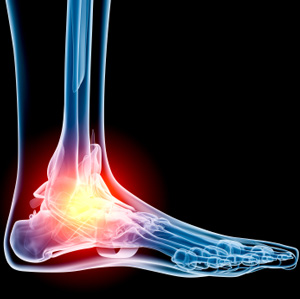
The Achilles is the tendinous extension of 2 muscles in the lower leg: gastrocnemius and soleus. It also serves to attach the plantaris, gastrocnemius (calf) and soleus muscles to the calcaneus (heel) bone, In humans, the tendon passes the  posterior of the leg to the ankle It is about 15 centimetres (6 in) long, and begins near the middle of the calf.

 The Achilles’ muscle reflex tests the integrity of the spinal root.  The tendon can receive a load stress 3.9 times body weight during walking and 7.7 times body weight when running. (Think about  that on your next run)  Achilles tendon ruptures are most likely to occur in sports requiring, sudden eccentric stretching, such as sprinting, also long runs pounding the pavement will do the job just as well.

Some of the Problems/ Injuries that occur Insertion Tendonitis This is an inflammation at the point where the Achilles tendon inserts into the heel bone. When you have this problem you will have tenderness directly over the insertion of the Achilles tendon, which is commonly associated with calcium formation, or a bone spur forming just above the insertion point. You may also suffer a Retrocalcaneal bursitis; this is caused by movement-related irritation of the Retrocalcaneal bursa, the fluid-filled cushioning sac between the heel bone and the Achilles tendon. The bursa can become inflamed or thickened and stick to the tendon, because of overuse or repetitive loading. You will feel pain when squeezing the tendon itself or the space just in front of the tendon.

Some of the Problems/ Injuries that occur

Insertion Tendonitis This is an inflammation at the point where the Achilles tendon inserts into the heel bone. When you have this problem you will have tenderness directly over the insertion of the Achilles tendon, which is commonly associated with calcium formation, or a bone spur forming just above the insertion point. You may also suffer a Retrocalcaneal bursitis; this is caused by movement-related irritation of the Retrocalcaneal bursa, the fluid-filled cushioning sac between the heel bone and the Achilles tendon. The bursa can become inflamed or thickened and stick to the tendon, because of overuse or repetitive loading. You will feel pain when squeezing the tendon itself or the space just in front of the tendon.

I know that retrocalcaneal bursitis are  associated with Rheumatoid arthritis ,but in most occurrences in athletes, only  one side is involved so may  not be associated with a “Systemic disease ” Please get this checked by your GP if you have any doubts”.

Tendonitis also involves pain in front of the Achilles tendon and a bony enlargement of the heel bone, known as Haglund’s deformity, which is referred to as a ‘pump bump.’ “Most cases of Haglund’s deformity will occur in ladies who wear high-heeled shoes, but runners are also prone to this sort of injury.

Painful shoulder injury then he came to Getfitstayfit Norfolk

Shoulder Trauma in Norwich

Norman had a very Painful Shoulder Injury.

He came to us after he had been struggling for 12 years, his body had adapted to his injury  and he tried to cope with it, compensating in things like turning his head , lifting his arm , putting on a shirt or jacket. “He believed he would just have to live with it”

Being a self employed man feeling he could not take time off work because he had a family to look after, Norman continued to work ,but was always in pain.

Don’t take it from us have a look at His Testimonial, how we helped him to get back to fitness, how he can turn his head again and how he now gets a good nights sleep something he had not had since the accident.

Cold Air and how it the affects our Muscles & Joints

Cold Air and how it the affects our Muscles & Joints

Did you know that you muscles react to cold air similar to a barometer

In the cold months that are now upon us, unlike the weather we have had this last couple of weeks, cold air brings with it lower barometric air pressure.  This means gas expands when heated and contracts when cooled so the lower air temperature it will causes the air to constrict the result is lower pressure. Well this is the same affect on your muscles they constrict and tighten . This lower air pressure, causes the soft tissue around your joints to expand in response, and it infringes on the joints, which can cause pain that radiates into the muscles making them more prone to cramps and spasms and generate more pain.

Are You Prepared ?


This is why you must warm up and stretch, it is so important when training in lower temperatures, apart from anything else you need to do this for you cardiovascular system.

Even if you are going into a warm gym to do your training, remember your muscles would have got cold prior to getting in there. be kind to them they have a lot of work to do.

We have been writing about getting your body ready for Spring When we have all been use to Winter for so long. Our muscles are Tight and Contracted, no one wants constricted muscles it is not good for you, its like being in a Straight Jacket, struggling to get out.

Cold Air will also affect any Pre-existing Conditions people have

If you sufferer from Arthritis, Fibromyalgia, or have any joint injury you are going to feel it in the cold weather more, because of the nature or these problems they are more  susceptible to cold weather  and how it effects your joints and muscles you are already experiencing pain, so when the winter months come  the changes in temperature and weather will exacerbate your condition, it  brings with it more problems than you  already have. We all know that  Arthritis causes swollen joints, so  when the soft tissue expands around the joints, it causes more pressure and pain.

Regular Maintenance in the form of Neuromuscular Therapy along with Sports Massage can help immensely in the winter months for anyone with Joint pain, and this is a time of year when you need to keep more active, to keep warm, so Therapy massage will enable you to do this.

Along with the Bioneuro, that will aid circulation that in turn will help towards the reduction of pain especially in people with Arthritis 

it works in a way that it can get into the joints that normal massage may not be able too.

With  Neuromuscular Techniques, remedial massage, we can deal with a lot of the Muscular Skeletal problems that can be caused by the cold weather.

We want you to enjoy the cold months keep exercising, enjoy time with your family outdoors, Winter need not be all doom and gloom.

Meniscus injury, Pre & Post Surgery Treatment With Getfitstayfit Norfolk

Steve’s Bad Knee. We seem to be having a lot to do with knees at the moment and as we have more and more clients that like to run and knee injuries seem to be a problem, we thought you may want to hear Steve’s story.

The knee is one of the most often injured joints in the human body. Being the biggest joint, it is composed of the femur that rotates on the upper end of the tibia, and the kneecap patella, which slides in a groove on the end of the femur.

The knee also contains large ligaments, which in turn help control physical activity by connecting bones and by holding the joint against abnormal types of motion. Another important formation is the meniscus, is a block of soft cartilage between the femur and tibia that serves to cushion the knee and helps it soak up shock during activity.

Steve, an excessively keen runner came to our clinic with a knee issue. Locking as he was running and walking, being in extreme pain as well. Following treatment on the Bioneuro System for pre surgery and also post surgical this man is up and ready for action again.